We had 92 people coming and I treated the seating like a hostage negotiation. My cousin Dee could not be near her ex. Grandma needed to be close to a bathroom and far from the speakers. The college friends wanted one loud table and the coworkers wanted to be ignored. I sat on the floor of our living room with little sticky tabs, one per guest, and moved them around until almost midnight on a Wednesday.
Here is the thing about laying out a room. The number of guests changes everything, and not in the neat way the planning blogs make it sound. Fifty people is a different animal than a hundred and fifty. Round tables eat floor space. Long tables look amazing in photos and then nobody at the far end can hear the toasts. I learned most of this by getting it wrong on paper first, which is cheap, and then almost getting it wrong in real life, which is not.
So below are the tools and printables I actually leaned on, or wish I had. I print one test page on plain paper, tape it to the wall, and walk past it for a day to see if the layout still makes sense when I am not staring at it. A few of these are affiliate links. Grab one and a little bit comes back to me, costs you nothing.
Heads up, some links here are affiliate links. Grab a template through one and I get a small cut, no extra charge to you.
The spreadsheet that stopped me from losing my mind
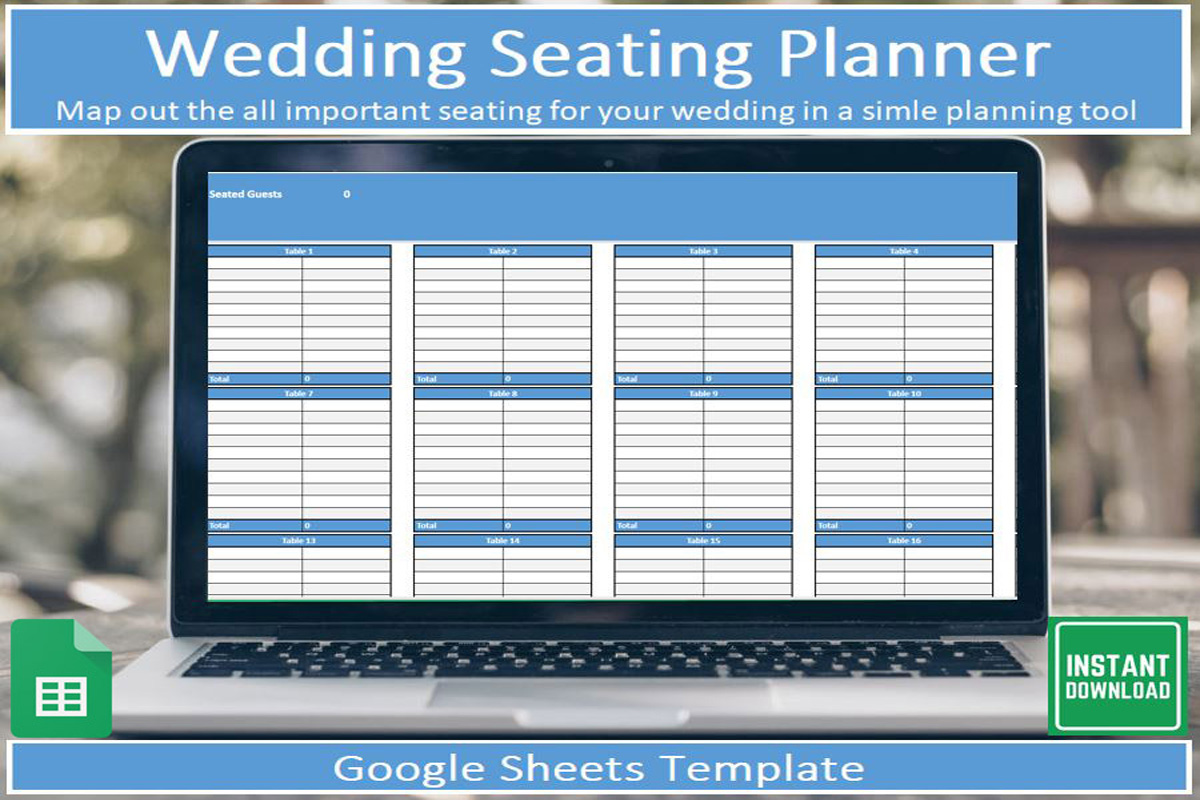
This is where I would start if I did it over. You drop your guest names in, tag who sits where, and it keeps a running count so you stop double-booking table six. I had been doing it with a notebook and a pencil that I kept losing in the couch, which is how my friend Priya ended up assigned to two tables at once.
What made it click for me was being able to drag people around without erasing anything. I moved my whole groom-side family twice when his aunt decided last minute she was coming. No rewriting. Just retype a number and the totals fix themselves.
One gripe. It assumes you know your final headcount, and I did not until about three weeks out. So I had a bunch of “maybe” rows hanging off the bottom that made the count look scarier than it was. Once I deleted those it behaved.
Clean lines for the couple who hates fuss
My maid of honor is the kind of person whose apartment has exactly four things in it, all gray. This is the chart I sent her. Plain, modern, lots of white space, the type of thing that does not fight with the rest of your decor. She used it for a 60-person backyard thing and it looked like it belonged there.
I typed our names into a version of this for fun just to see, and the spacing held up even when I had a few long double-barreled last names that usually wreck a tidy layout. It did not crowd them.
The catch is it is so minimal that a dim venue swallows it. The text is fine and light. If your reception is candlelit, bump the font weight before you print a stack, or you will be squinting at it from the bar.
The big board everyone reads on the way in
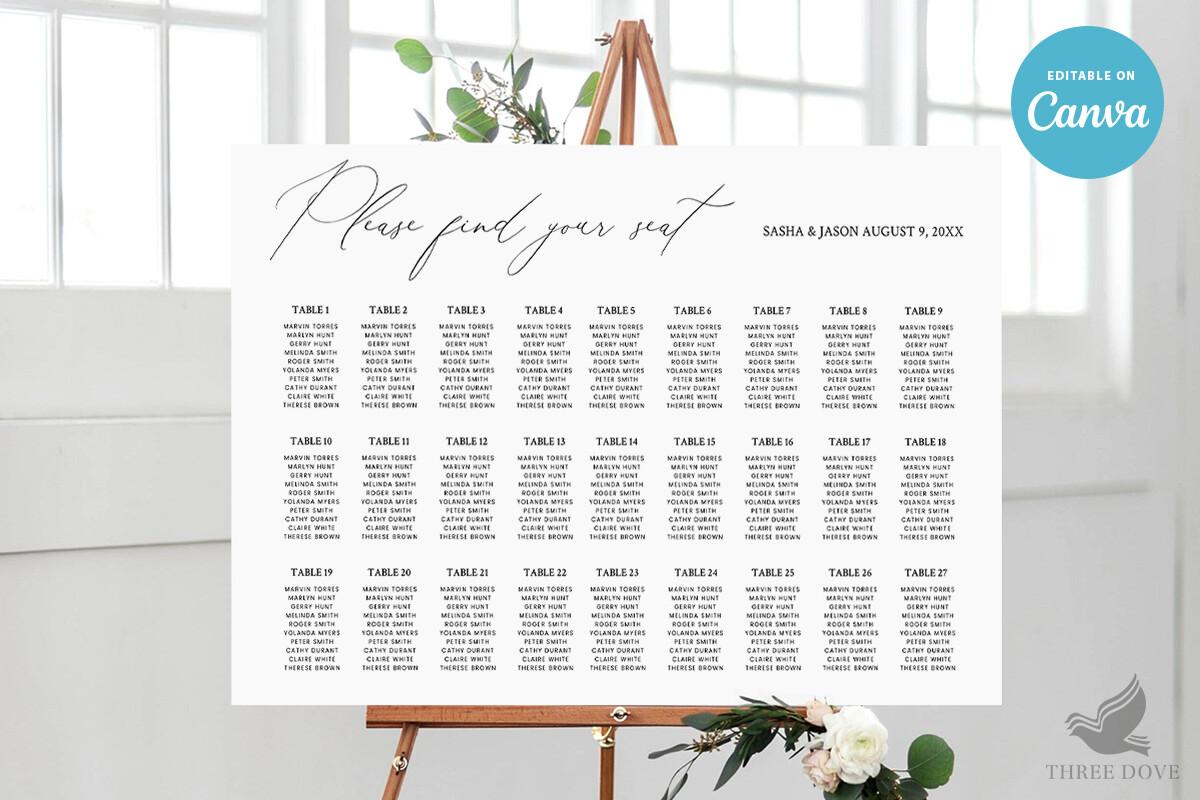
When you have a hundred-plus people, you want one large sign at the entrance, not little cards scattered around. This is that. A single display chart, names grouped by table, big enough to read while a line of people piles up behind you. I printed a test of one at the copy shop on Bell Street because my home printer cannot handle anything bigger than a greeting card.
I ran ours at 18 by 24 and it was readable from maybe eight feet, which is exactly what you need so people are not leaning in and breathing on it. Group by table number, alphabetize within each one. Trust me on the alphabetizing.
My one note. Proofread it out loud with someone else holding the list. I had “Thompson” at table 4 and table 9 and did not catch it until my dad read it back. Print is forever, or at least until the reception ends.
Little cards for the tables that need a soft hand
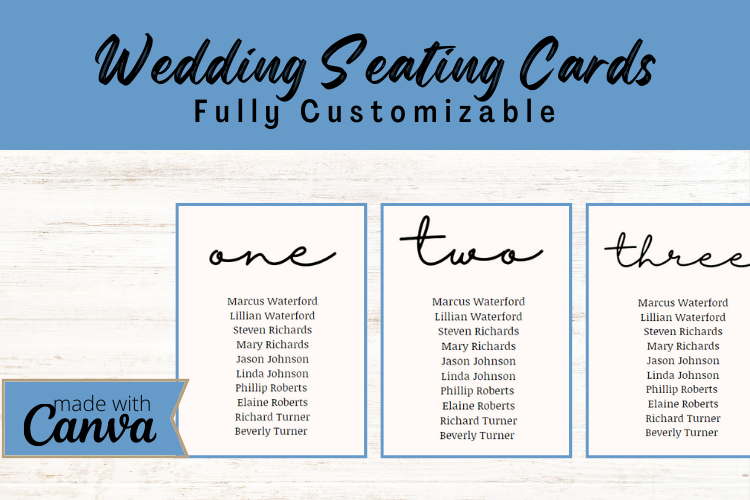
Not everyone wants the big board approach. My cousin did individual place cards at each setting because she had assigned seats down to the chair, mostly to keep two specific people apart. These plain ones are what I would grab for that. No fuss, just a name and a spot.
They print four to a sheet, which saved me cardstock when I was helping her do 80 of them on her kitchen table the Sunday before. We had an assembly line going. I folded, she wrote, the cat sat on the stack.
The gripe is the fold line. It is suggested but not scored, so if you are folding 80 by hand they come out a little uneven unless you run a bone folder or the back of a butter knife down each one. We did the butter knife. Took an extra half hour.
When you want the names to look handwritten without doing it yourself
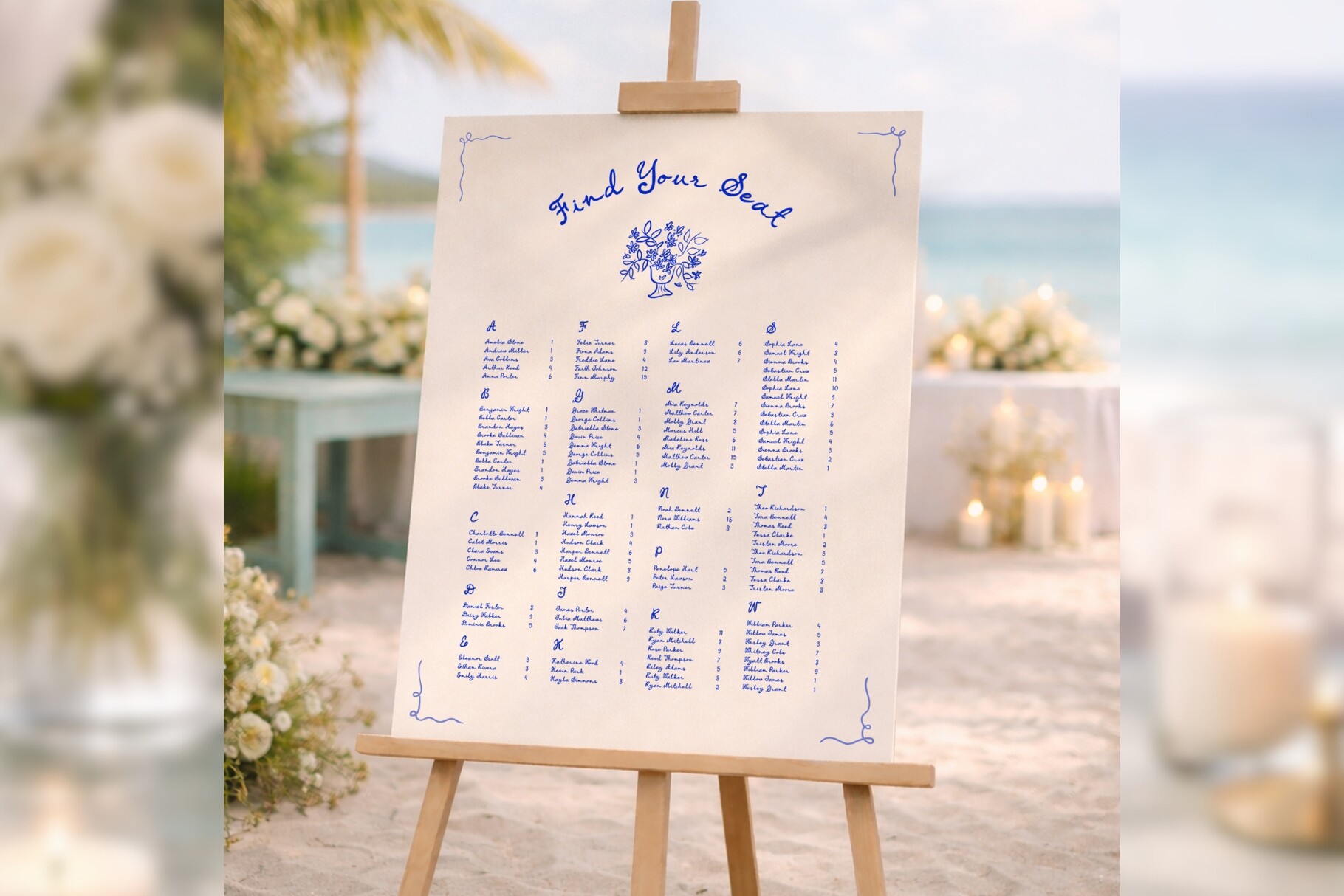
My handwriting looks like a seismograph. So when a friend wanted that hand-lettered look for her chart and signage, I pointed her here. It is a drawn alphabet you piece together, so the names look like someone with a steady hand did them, which neither of us has.
She used it across her welcome sign and the seating board so everything matched, and that consistency is the part that actually reads as “intentional” from across the room. I helped her lay out the letters one evening with way too much wine, and it still came out clean.
Heads up, it is fiddly. Lining up letters by hand takes patience, and a long table name like “The Hendersons” means a lot of nudging. Budget an evening, not an hour.
The one for a garden party that wants a little romance
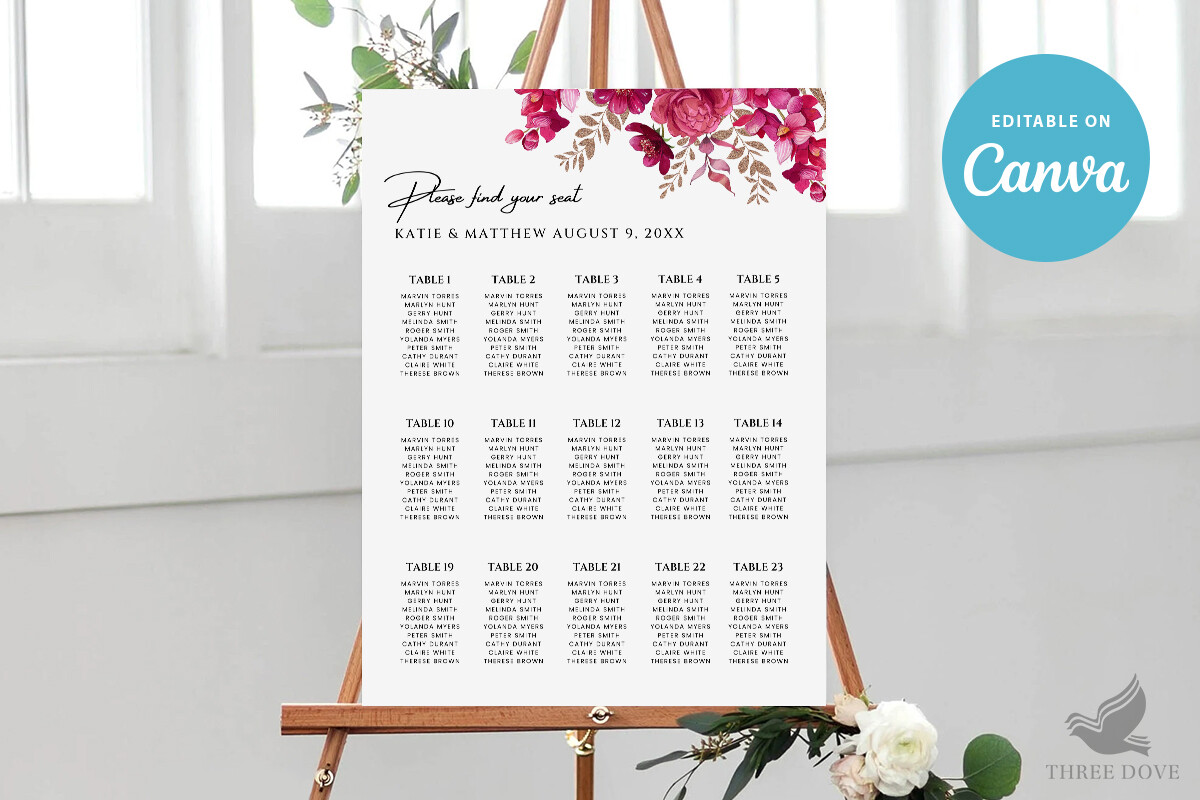
This is the chart I keep recommending to anyone doing an outdoor or spring wedding. Florals around the border, soft, but not so busy it eats the names. A coworker used it for her 110-person vineyard reception and it sat on an easel by the entrance like it had always been there.
I mocked up our names in it just to compare against the plain version, and honestly the flowers gave it a warmth the minimalist one did not have. Depends on your vibe. Hers matched her invitations, which made the whole thing feel like one piece.
My one complaint is the florals near the corners can crowd the first and last table groups if you have a lot of names. She nudged the margins in a hair and it fixed it. Just check the corners before you commit to good paper.
Place cards for the barn-and-string-lights crowd
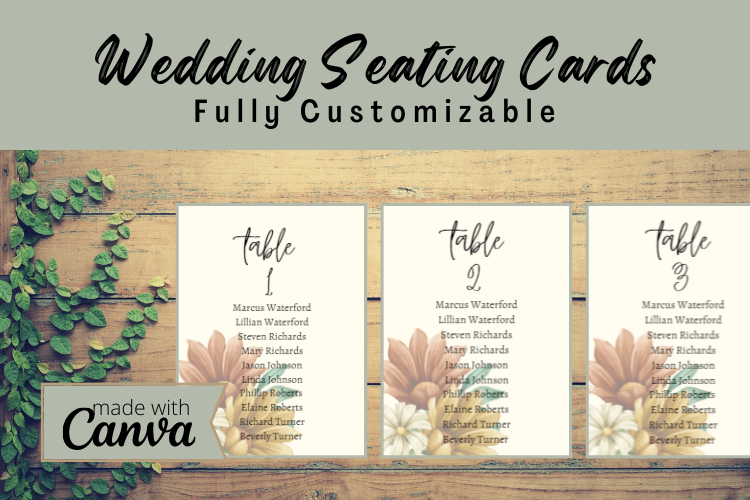
If your reception is the kind with reclaimed wood tables and mason jars you swore you would use and mostly did not, these are the place cards that fit. Floral, a touch rustic, warmer than the plain set. My neighbor did her whole farm wedding with these and they looked at home next to the eucalyptus runners.
We printed a batch on a slightly heavier cream cardstock, around 110 lb, because the thin stuff curled in the humidity and her wedding was in July. The heavier weight stood up on its own without flopping over by the salad course.
The nitpick. The floral ink is denser than the plain version, so a streaky home printer will show it. She ran hers at the print shop for that reason. If you test at home and see banding in the leaves, that is your printer, not the file.
Questions Brides Ask Me
How do I lay out tables by guest count?
Honestly, I figured this out by moving sticky tabs around my living room floor. Rough version: under 50 you can usually do a handful of round tables or a couple of long ones and still see everybody. Around 100 you are looking at ten to twelve tables and you have to start thinking about a center aisle so the catering staff can actually move.
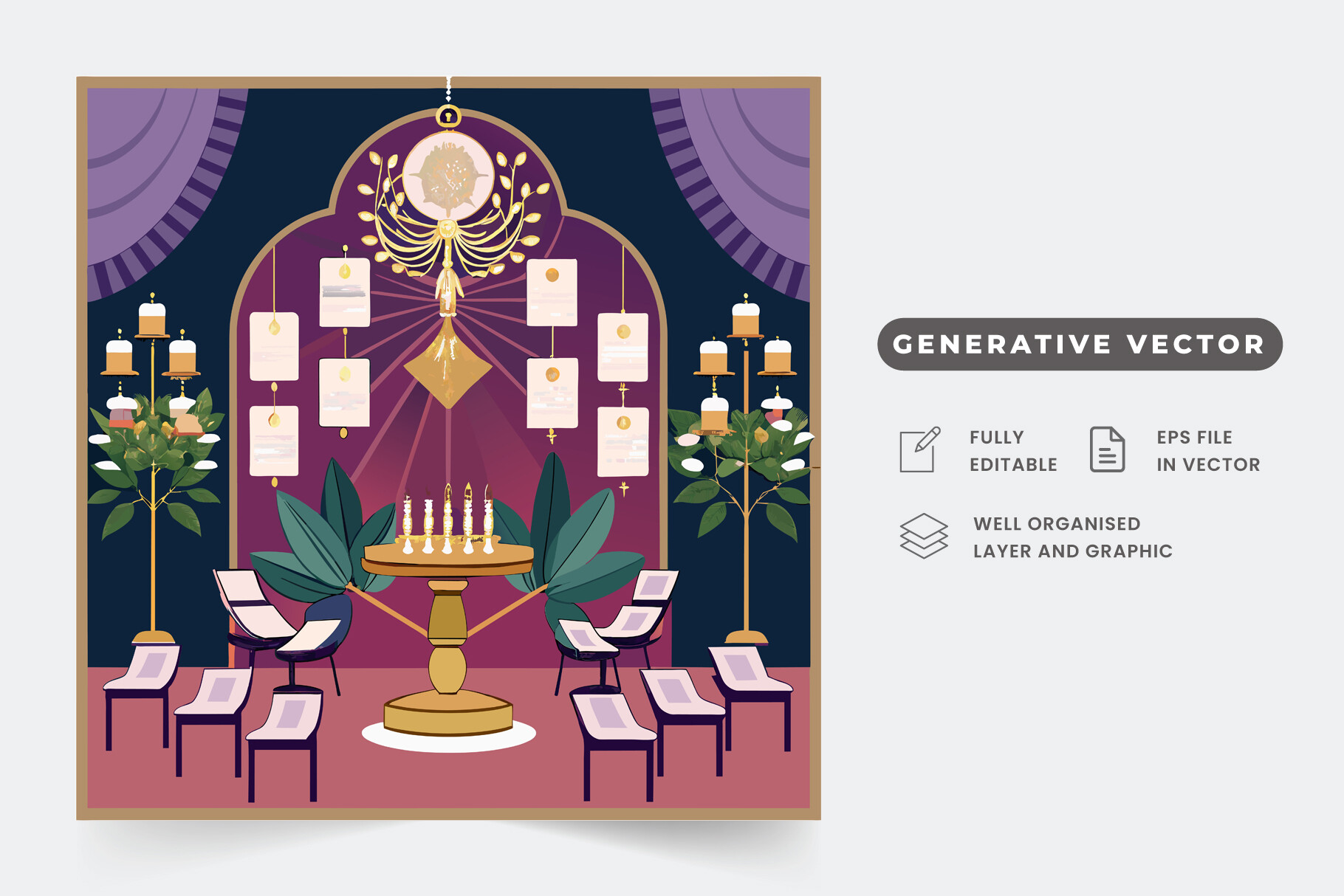
The trick that saved me was sketching the actual room first, doors and all, then dropping tables in. I did ours on the back of a takeout menu. A spreadsheet keeps the count honest so you do not seat 14 at a 10-top by accident, which I almost did.
Round or long tables?
Yep, this is the fight everyone has. Round tables are easier to talk across and they squeeze into odd rooms better, but they eat floor space and you need more of them. Long tables photograph beautifully and feel like a feast, and then your aunt at the far end cannot hear a single toast.
We ended up mixing. Long table for the wedding party, rounds for everyone else. If your space is tight or weirdly shaped, I would lean round. If you have a big open hall and want the dramatic photo, go long and just put a mic near the middle.
Where do the couple sit?
We did a sweetheart table, just the two of us, and I have zero regrets. It was the only ten minutes all night we got to actually sit together and eat while everyone else mingled. Felt a little exposed at first, then it felt like the best decision I made.
The other route is a head table with the whole wedding party, which is great if your people all get along and a logistical headache if they do not. A friend did the head table and spent the dinner refereeing. Pick based on your crowd, not on what the photos are supposed to look like.
Before You Hit Print
None of this has to be perfect. I redrew our layout four times and on the actual day two tables swapped themselves around anyway because people just sat where they wanted. The world kept turning.
Start with the room, then the count, then the chart that matches your vibe. Print a test page, tape it up, walk past it for a day. If it still makes sense when you are not trying, you are done. Go deal with the seating drama instead.